

Indra Launches Next-Generation Naval Radar Amid Multibillion-Euro Renewal of European Fleets
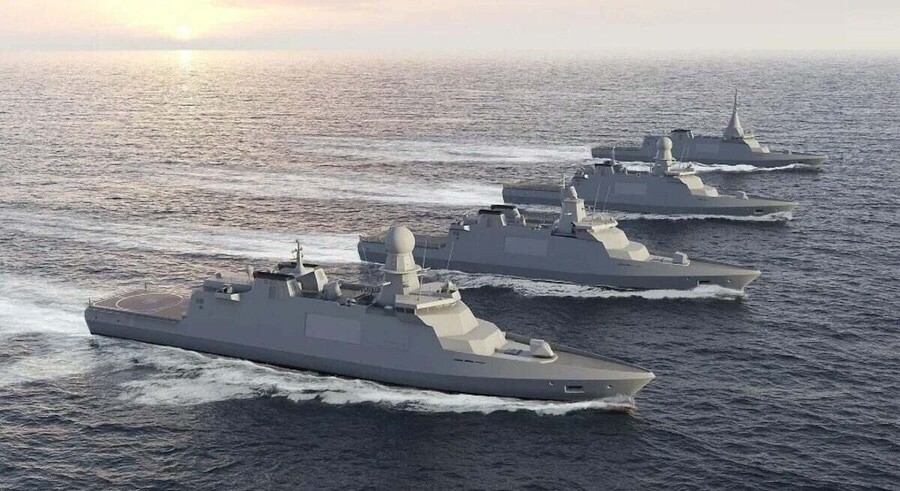
The technology company unveils Prisma-S, its most advanced naval radar, a 4D Full Digital multifunction sensor. Indra is positioning itself to capitalise on a wave of new naval programmes in countries including Spain, Germany and France, as well as the major European corvette project.
Europe is racing against time to renew its surface fleets. In recent months, Germany has cancelled one of its largest naval programmes, Sweden has prioritised delivery speed in its frigate selection, and several countries are reviewing their plans amid delays and cost overruns. Against this backdrop, Indra has unveiled Prisma-S for the first time, a 4D Full Digital active electronically scanned array (AESA) radar which, according to the company, is designed to equip next-generation European and allied warships with the most advanced air and surface surveillance capabilities.
Germany is the most striking example. Its Ministry of Defence cancelled the F126 programme for six anti-submarine warfare frigates following years of delays and cost overruns under Dutch shipbuilder Damen. With the proposed change of contractor, the total cost had exceeded €18 billion. Berlin has ordered four MEKO A-200 frigates from TKMS, with an option for four more.
In northern Europe, the United Kingdom will retain its eight Type 26 frigates, while Norway has purchased at least five for approximately €11.5 billion. France is backing its FDI frigate programme: France, Greece and Sweden have ordered a total of 13 vessels, with Sweden selecting the design in May for its four Luleå-class frigates.
Denmark has yet to make a decision, but the FDI is competing against Babcock's Arrowhead 140 and a second series of Navantia's F-110 frigates. Meanwhile, the Netherlands and Belgium's ASWF programme has suffered delays, and Belgium is expected to decide before the end of the year whether to proceed or seek an alternative.
Spain is making progress with its F-110 programme. The first frigate was launched in September 2025, followed by the second just a week ago in Ferrol, as part of a five-vessel programme. However, Navantia and the Spanish Navy are already working on the next generation, the F-110 Flight II, with characteristics more closely resembling those of a naval destroyer. The Spanish company is also exploring opportunities to export the vessel to markets such as the United States.
The European Corvette
Beyond these individual programmes stands the European Patrol Corvette (EPC), the most ambitious naval project under European defence cooperation. This Permanent Structured Cooperation (PESCO) initiative, led by Italy, Spain, France and Greece, involves 46 companies from 12 countries and aims to develop a modular, multipurpose and interoperable corvette for several European navies.
The current phase seeks to deliver a certified design and a prototype covering two variants: a Full Combat Multipurpose version and a Long Range Multipurpose patrol version. In February, Navantia and Fincantieri signed a memorandum of understanding to manage the programme through a joint venture and market the combat variant to other European partners.
It is precisely this generation of vessels that Indra is targeting with Prisma-S. According to the company, it is its most advanced naval radar: a 4D Full Digital multifunction sensor capable of simultaneously supporting anti-air and anti-submarine warfare operations, as well as long-range target designation.
In addition to range, azimuth and altitude data, the radar measures target velocity, enabling it to track trajectories and designate targets accurately. It is also designed to operate in congested electromagnetic environments and withstand adversary countermeasures, a capability Indra considers crucial to ensuring European and allied superiority in increasingly complex operational scenarios.
Source: El Economista