

From paper to 3D: How the naval industry is transforming its technical knowledge
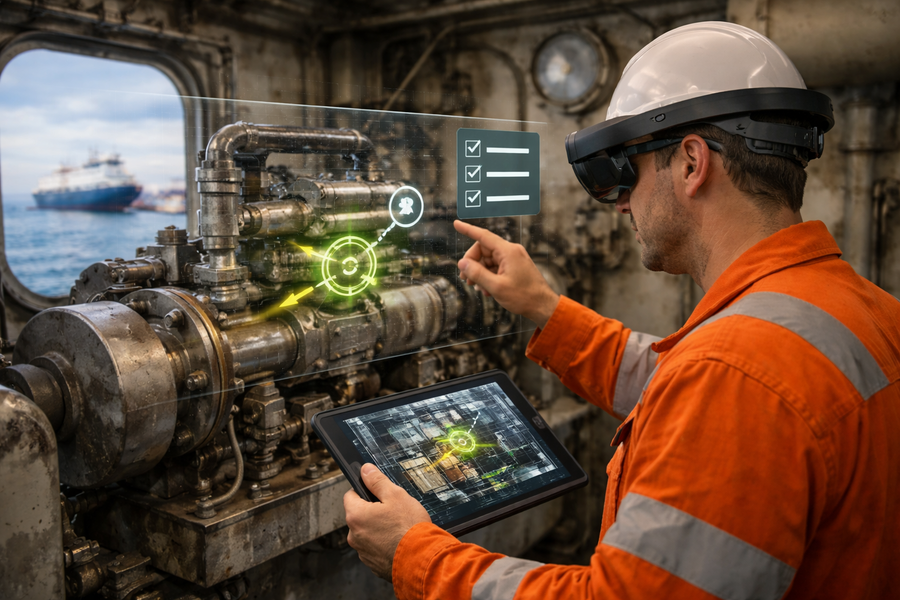
Digitalization has arrived in the naval sector to stay, but the real change is not only in ships or shipyards—it’s in how technical knowledge is transmitted. The industry is starting to look beyond traditional manuals, embracing new ways of training, maintenance, and knowledge transfer that are more visual, intuitive, and effective.
For decades, technical knowledge in the naval industry has been transmitted in the same way: paper manuals, PDF documents, blueprints, technical instructions, and above all, the accumulated experience of professionals. Shipyards, shipowners, and the auxiliary industry have built their knowledge around procedures that often depend more on people than on systems.
However, today the naval sector faces a silent but significant challenge: the loss of technical knowledge. The retirement of professionals with decades of experience, staff turnover, and the increasing technological complexity of ships make it increasingly difficult to effectively transmit this knowledge to new generations. The question is no longer whether information should be digitized, but how to do it in a way that is truly useful in day-to-day operations.
In many maintenance, installation, or repair operations, operators work with lengthy manuals, complex blueprints, and technical documentation that is not always easy to interpret. This results in longer intervention times, a higher risk of errors, and a steep learning curve for new staff. Moreover, in a naval environment, where many operations are performed on board, in confined spaces, or under complex conditions, consulting paper or computer-based documentation is not always the most practical solution.
Beyond simple digitalization
In recent years, the sector has begun to go beyond simply digitizing documents. It’s no longer just about having manuals on a tablet or computer; it’s about transforming information into something more visual, intuitive, and easy to understand. In this context, technologies such as Augmented Reality, Virtual Reality, and interactive 3D content are being used to turn technical manuals into step-by-step visual instructions, where the operator can see exactly which part to handle, which tool to use, or which procedure to follow.
This change not only improves efficiency but also reduces errors, facilitates training, and allows less experienced personnel to perform complex tasks more safely. Spanish tech companies like ARSOFT are working precisely in this direction, developing solutions to transform traditional technical documentation into interactive 3D content used for training, maintenance, and remote assistance across various industrial sectors, including naval.
Immersive training: learning by doing
One of the areas where this change is most noticeable is training. The naval industry needs to onboard new professionals and reduce learning times, and traditional methodologies are not always sufficient. Immersive training and 3D technical content allow users to learn by doing, better understand systems, and face real-life scenarios in a safe environment before working on the actual equipment. This not only improves learning but also increases operator confidence and reduces risks.
The naval industry has always been technologically advanced, but now the big leap is not only in ships but also in how knowledge is managed and transmitted. Digitizing technical knowledge is not just scanning manuals—it’s about transforming information into visual, accessible, and easy-to-understand knowledge. In a sector where precision, safety, and efficiency are critical, the way people access information can make a huge difference.
Towards a more visual and interactive future
In the coming years, we will see how shipyards and companies in the sector move toward models where technical information becomes increasingly visual, interactive, and available anytime, anywhere. After all, digital transformation is not just about technology—it’s about people and how they work better.